Apicoectomy
When is an Apicoectomy Needed?
In most situations, root canal therapy is all that is needed to treat infection inside a tooth. Occasionally, however, non-surgical treatment may not fully resolve the issue. This can occur when there are hidden canals, fractures, or complex anatomy that cannot be detected on standard imaging, or when infection affects the root tip or surrounding bone.
Endodontic surgery allows the endodontist to directly access and treat these areas. An apicoectomy is the most common surgical approach used to manage these cases and support long-term healing.
What is an Apicoectomy?
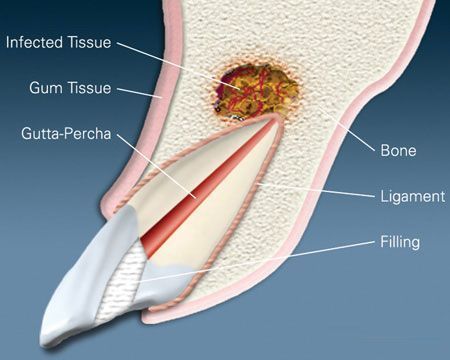
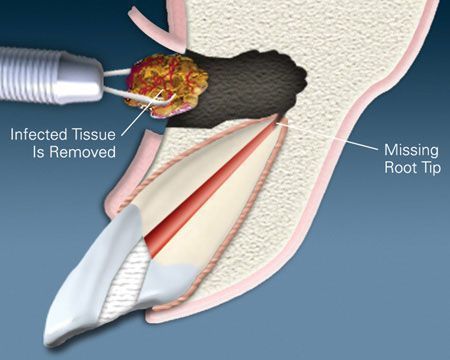
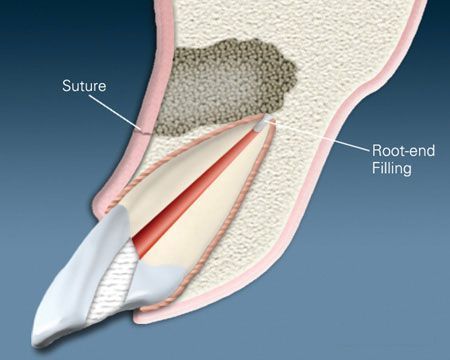
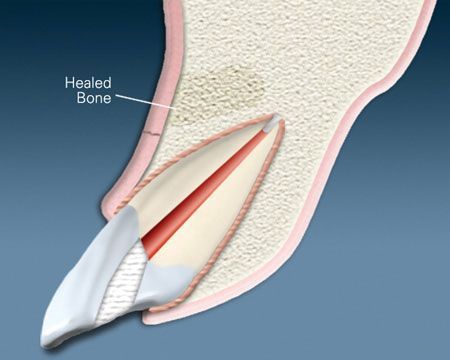
During an apicoectomy, a small incision is made in the gum tissue near the affected tooth to expose the underlying bone and inflamed tissue. The infected tissue is carefully removed along with the tip of the root. A root-end filling is then placed to seal the canal and help prevent reinfection. The gum tissue is sutured, and the area is allowed to heal naturally over time. Bone healing typically occurs over the following months, restoring stability and function to the tooth. Procedure steps include: